
Insulation
The Best Insulation for a Van Conversion
Choosing the right insulation for your van conversion is one of the most important (and surprisingly overwhelming) steps in the build process. I spent a lot of time researching this because insulation directly impacts temperature control, moisture management, and overall comfort while living on the road.
One of the biggest lessons I learned?
It’s better to slightly over-insulate than under-insulate.
Moisture buildup inside your van can lead to condensation—and eventually mold, which is something you absolutely want to avoid. When insulating your van, make sure every gap, crevice, and corner is filled, no matter how small it seems.
What I Chose for My Van Build
Because I spend most of my time in a cold Canadian climate, I needed insulation that could handle extreme temperatures while also being safe and non-toxic for both me and my dog, Tucker.
After weighing all my options, I chose Havelock Wool insulation.
Why I Chose Havelock Wool
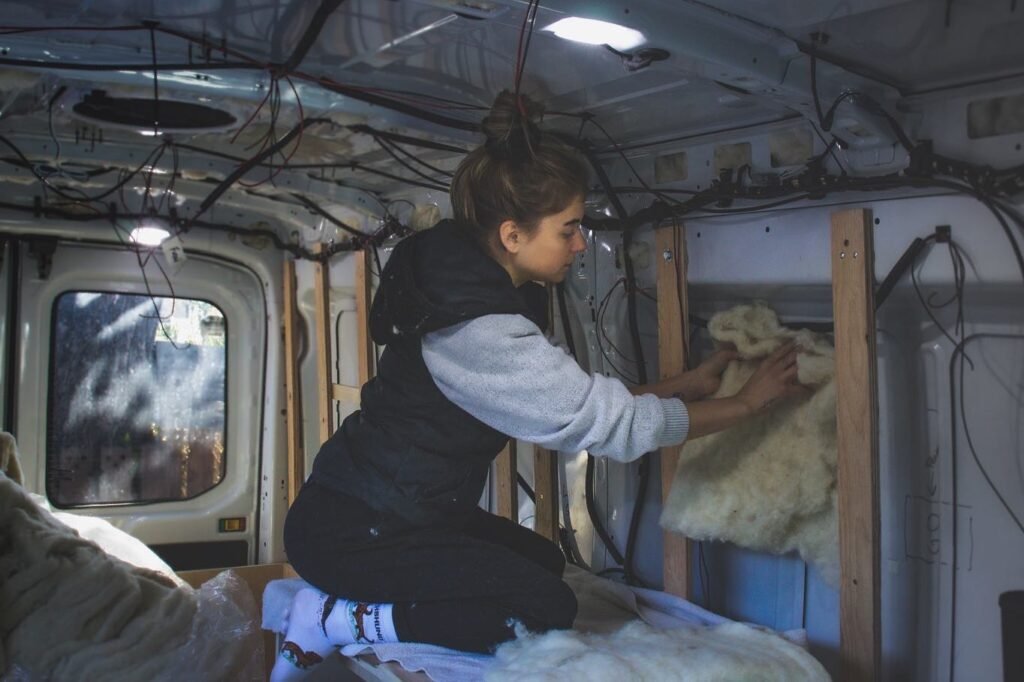
There are pros and cons to every insulation type, but here’s why wool stood out for my van life build:
Moisture Control: Wool naturally absorbs and regulates moisture, helping prevent condensation issues inside your van.
High R-Value: With an R-value of approximately R7, it provides strong insulation for colder climates.
Sound Dampening: It significantly reduces road noise—something I immediately appreciated after hearing how loud the van was before the build.
Eco-Friendly: Sustainable, biodegradable, and compostable.
Simple Installation: Unlike other methods, wool doesn’t require multiple layers or materials—it’s a one-product solution.
A Personal Note
One challenge I faced with choosing wool was that it conflicted with my personal beliefs around animal welfare. It wasn’t a decision I made lightly.
At the end of the day, I prioritized health and safety for both myself and Tucker. To balance that decision, I chose to give back by donating to animal rescue farms, which felt aligned with my values.
Why I Didn’t Choose Other Options
There are many insulation methods used in DIY van conversions, including fiberglass and spray foam.
Fiberglass insulation can be irritating and less ideal for a small living space.
Spray foam insulation, while effective, can be extremely expensive and, in my opinion, too toxic for a confined environment like a van.
While these options work for some builds, they didn’t align with my priorities for health, safety, and sustainability.
Alternative Insulation Options
If Havelock Wool isn’t accessible or within your budget, another effective method includes combining multiple materials:
Reflectix (for radiant heat reflection)
Rigid Foam Board Insulation (for structure and thermal resistance)
Gaps & Cracks Insulating Foam Sealant (to seal all small openings)
How to Install This Method:
Apply Reflectix to the van’s metal walls using adhesive spray.
Cut rigid foam board to fit the floors, walls, and ceiling.
Use foam sealant to fill all gaps and ensure a tight, insulated seal.
This layered approach can be a great alternative for maintaining temperature control and reducing moisture buildup.
Final Thoughts on Van Insulation
There’s no one-size-fits-all solution when it comes to insulating your van. The best choice depends on:
Your climate (cold vs. warm environments)
Your travel plans
Your budget and values
No matter which method you choose, the goal is the same: create a comfortable, safe, and efficient space for your van life adventures and travel lifestyle.